For some people, the feeling of danger doesn't stop there. When anxiety symptoms are severe, long-lasting and get in the way of our daily function, it may be a disorder.
In these cases, the anxiety can feel overwhelming. It may seem out of proportion to the situation and hard to manage alone. This can affect a person's ability to function at work, in relationships or in daily life.
For example, a person preparing for a big exam or work presentation may have trouble sleeping the night before. Their heartbeat quickens and they feel giddy and short of breath to the point where they call in sick to school or work.
There are several distinct types of anxiety disorders, each with their own triggers and characteristics.
Some conditions classified as anxiety disorders include:
- Phobias: Extreme or irrational fear of something, such as heights (acrophobia) and blood (hemophobia)
- Panic disorder: Frequent panic attacks that recur for at least a month. These panic attacks can feel like sudden surges of intense fear and impending doom, with physical symptoms such as a racing heart, clamminess, chest discomfort, shortness of breath and dizziness. The symptoms reach a peak within 10 minutes and subside within 30 minutes even without any treatment. A person experiencing panic attacks may also fear for the next "attack".
- Post-traumatic stress disorder: Develops after exposure to a traumatic event such as a natural disaster, abuse or accident. This involves symptoms like flashbacks, nightmares, hyper-vigilance (being overly alert to danger), emotional numbness and persistent anxiety related to reminders of the trauma.
- Obsessive-compulsive disorder: An obsession that increases anxiety and a resultant compulsion (strong urge to do something) to reduce that anxiety
While these conditions all involve high anxiety, each needs its own way to diagnose and treat it. The remainder of this article focuses specifically on Generalised Anxiety Disorder (GAD).
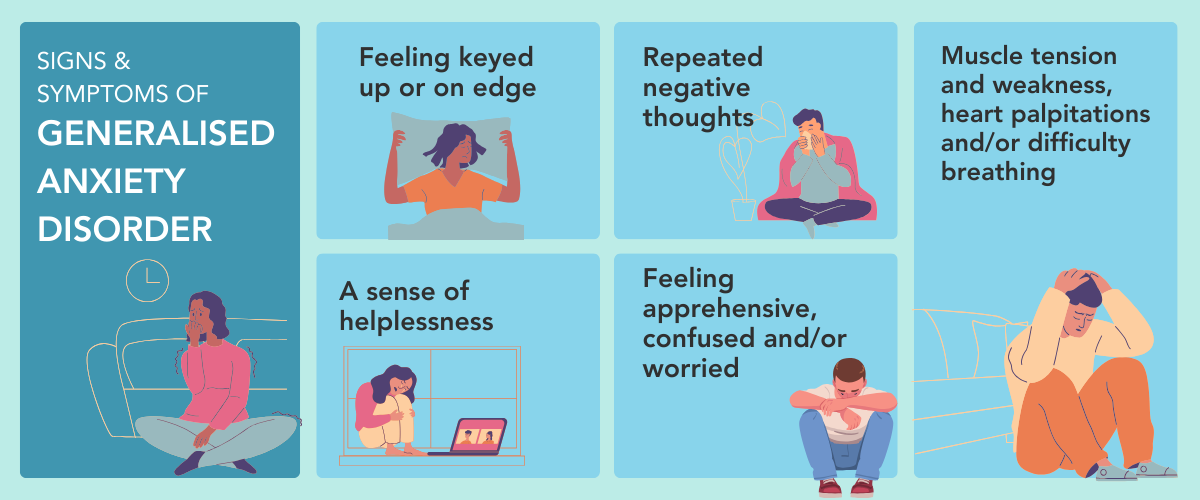
GAD presents differently from person to person, but there are a few common psychological and physical symptoms. In most cases, the anxiety symptoms occur most of the day and may not be restricted to any particular event.
Psychological symptoms
People with GAD experience worry, fear and concern for six months or more. It may feel like excessive, unspecific worry that seems difficult or impossible to switch off.
Common psychological symptoms include feelings of unease, difficulty concentrating, irritability and a tendency to expect the worst outcome in situations.
Physical symptoms
People can sometimes mistake physical symptoms of anxiety for medical conditions because they may manifest as muscle tension, headaches and fatigue.
They can also include sleep difficulties and a racing or pounding heart. Other symptoms include sweating, trembling and gastrointestinal upset (stomach problems). Shortness of breath may also occur.
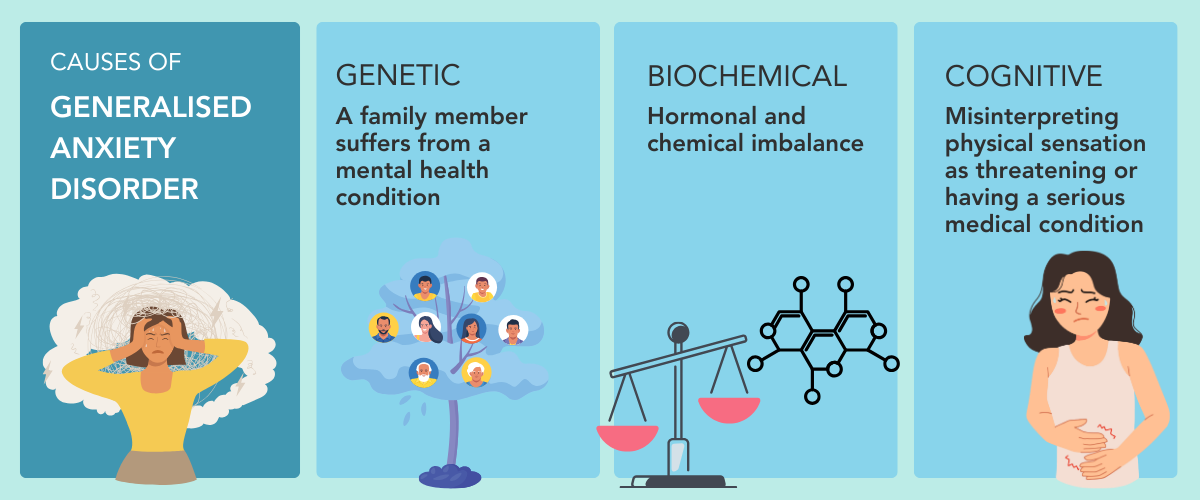
In most cases, GAD arises from a combination of factors. Biological factors like genes play a significant role. For example, in many patients' families, there is often a relative with an anxiety or mood disorder.
GAD also affects how the brain and body responds to stress. For some, this can mean a more sensitive or reactive response to perceived threats.
Certain personality traits can make someone more likely to feel anxious. These include perfectionism, trouble handling uncertainty and negative thinking patterns.
Environmental and life factors include chronic stress and major life changes. These changes can include job loss, relationship breakdown or illness. Other factors include financial pressure and childhood adversity.
The home environment may also affect the way a person responds to stress in adulthood. For example, a child who feels tense around a parent who is often strict and controlling may feel the same way as an adult when he works with a supervisor who has similar behaviour.
The aim of treatment for anxiety disorders is to reduce symptoms and restore quality of life. Treatments may include a combination of:
- Medication, such as anti-depressants to help control anxiety
- Cognitive methods to reframe unhelpful thoughts
- Behavioural methods to learn management strategies, including relaxation techniques to calm the body and mind
- Lifestyle changes such as reducing stress, getting enough sleep, exercise and rest time away from school or work
It may be worth seeking professional support for symptoms of anxiety if:
- They are affecting your work, studies or professional performance
- They interfere with your relationships or your ability to socialise
- You cannot get a good night's sleep
- You are avoiding situations, places or decisions because of fear or worry
- You are using alcohol, substances or other behaviours to cope
- You experience physical symptoms that have no clear medical explaination
Reaching out is a sign of self-awareness and courage, not weakness.
Here are practical strategies to make a meaningful difference in managing anxiety in everyday life:
- Physical activity is one of the most well-supported self-management strategies for anxiety. Regular aerobic exercise such as brisk walking can help to regulate stress hormones and improve mood.
- Sleep hygiene matters in helping to improve wellbeing. Establishing a consistent sleep schedule, reducing screen time before bed, and limiting caffeine in the afternoon can help.
- Mindfulness and breathing techniques can interrupt the anxiety cycle in real time. Slow breathing with the diaphragm helps to signal to the body that it's safe to calm down.
- Grounding techniques can help you feel anchored during periods of worry. Focus on five things you can see. Then notice four things you can touch. Next, listen for three things you can hear.
- Journalling can be a useful outlet for anxious thoughts. Writing them down creates space between you and these thoughts. This can make them feel less overwhelming and easier to examine.
- Engage in a routine which provides a sense of structure that can be grounding. Have regular mealtimes and routines to wind down and reduce baseline anxiety levels.
- At work, strategies such as breaking tasks into smaller steps, setting clear boundaries around working hours, and communicating needs to a manager or colleague can help manage anxiety in professional environments.
Anxiety can sometimes feel overwhelming, but it is manageable. A conversation with your local GP, polyclinic doctor or Family Service Centre counsellor is a good place to begin.
