Loneliness affects more than one's mood. It can also affect the way a person thinks, feels, and relates to others. Common psychological and emotional effects may include:
- Persistent low mood
- Increased anxiety or excessive worry
- Irritability
- Reduced self-esteem
- Heightened sensitivity to perceived rejection
- Difficulty trusting others
Over time, chronic loneliness can change how a person interprets social situations. They may notice signs of exclusion more often, even when they are not done intentionally. This can further reinforce withdrawal and isolation. While it does not automatically lead to mental illness, loneliness can negatively impact a person's wellbeing. Research has shown that prolonged loneliness is associated with:
- Heightened risk of depression
- Higher stress levels
- Sleep disturbances
- Cognitive decline in older adults
- Health risks and worsened heart health
Feeling lonely from time to time is normal. It can pass as circumstances of life change. But it becomes concerning when loneliness is persistent, distressing and begins to affect daily functioning, relationships and work or school performance.
Early recognition allows individuals and families to act before serious mental health concerns develop. Some warning signs include:
- Withdrawal from friends and family
- Loss of motivation and interest in hobbies
- Changes in sleep or appetite
- Feelings of hopelessness or worthlessness
- Neglecting personal hygiene or health
- Increased reliance on alcohol or other unhealthy coping behaviours
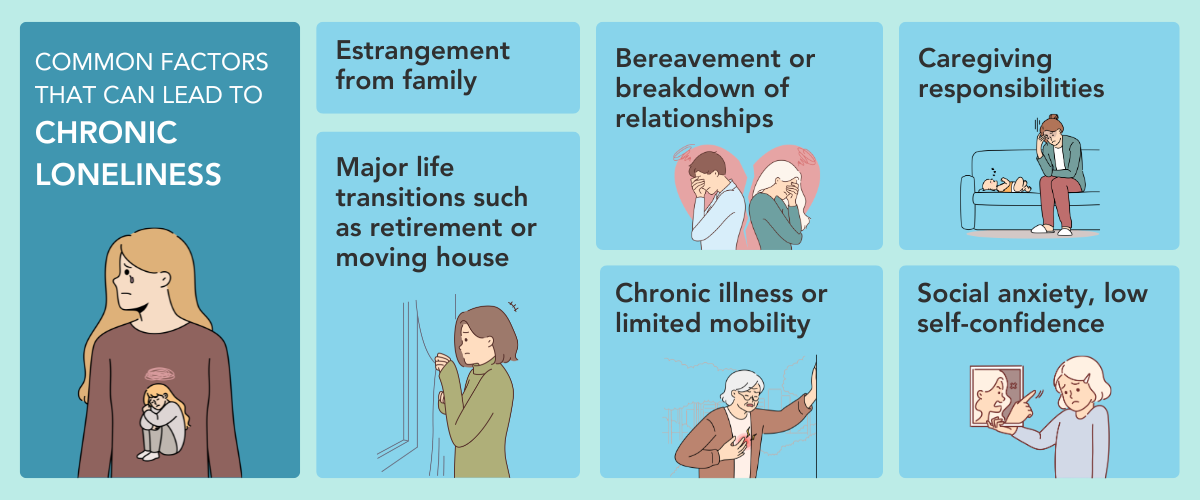
Loneliness can affect people at any age. Some situations can make a person more vulnerable:
- Major life transitions like starting school, entering the workforce, retirement or moving home
- Estrangement from family
- Bereavement or a breakdown of a relationship
- Chronic illness or limited ability to move around
- Caregiving responsibilities that reduce time for socialising with others
- Social anxiety or low self-confidence
- Overreliance on digital interaction at the expense of meaningful connection
Youth
Loneliness can appear differently at different life stages because our expectations of social relationships change as we age. Understanding this can allow families and communities to give better support.
Developmental and social pressures often shape loneliness among young people. Teenagers and young adults are figuring out who they are. They want to fit in and be accepted by their friends. Difficulties in school, friendships or romantic relationships can make youth feel more disconnected.
Social media may further intensify these emotions by making young people compare themselves to others' perfect-looking lives online.
Adults
Working adults may experience loneliness in ways that are less visible but equally impactful. Long work hours, demanding jobs and frequent commuting can leave little time for social interactions outside of work. Even when surrounded by colleagues, they may still feel emotionally distant from them.
Life transitions such as marriage, parenthood or relocation can shift priorities. This can cause old friendships to fade away. Taking care of children or older family members can further reduce chances to spend time with friends.
Elderly
Older adults may face retirement, loss of partners and friends, trouble moving around or long-term health issues. These can limit their opportunities to connect with others in meaningful ways. Retirement can also make them feel less useful or connected to others.
Loneliness does not have to control your daily experience. Sometimes, how we see our social world can make us feel disconnected. By changing how we think about this, we can take a powerful first step. We can start by recognising that being alone sometimes can actually help us feel better. Small moments of connection, like a brief chat with a neighbour, a shared smile or a kind gesture towards a stranger, do matter.
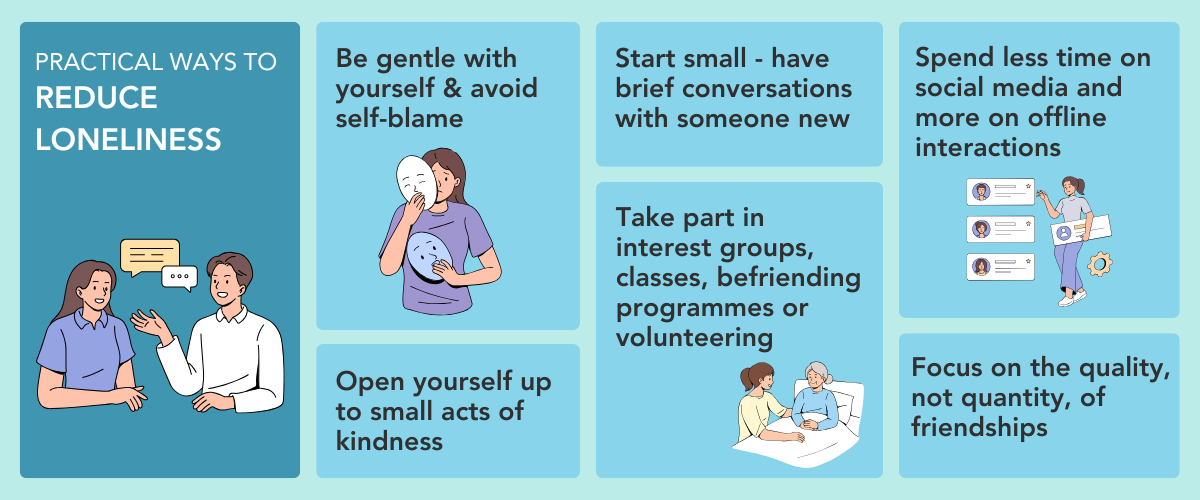
Tips for individuals:
- Recognise that it is not your fault and that others may just be navigating their own challenges.
- Be gentle with yourself and avoid self-blame.
- Let go of cynicism and mistrust by opening yourself up to small acts of kindness and meaningful interaction.
- Start with manageable social goals such as initiating brief conversations or reconnecting with an old classmate.
- Participate in structured activities such as interest groups, exercise classes, befriending programmes or volunteering with a skill.
- Focus on the quality of friendships, rather than the number of friends around you,
- Limit social media consumption, which can intensify feelings of social comparison.
Tips for caregivers, family and friends:
- Initiate regular, meaningful check-ins with your loved ones.
- Ask about their life experiences and family traditions, or simply provide a listening ear.
- Gently encourage social participation and do not force or criticise their efforts.
- Support access to community programmes, senior activity centres or group activities.
- Help them with practical needs such as transport, or learning how to use digital apps for communication.
- Watch for signs of withdrawal, declining mood or loss of interest in daily activities.
Recognising loneliness as a common human experience can help to reduce stigma around the topic and encourage conversations. By noticing signs of emotional distress and offering support, family and friends can help to alleviate feelings of isolation and build meaningful relationships at every stage of life.
